Congo's Vision for Economic Diversification by 2035
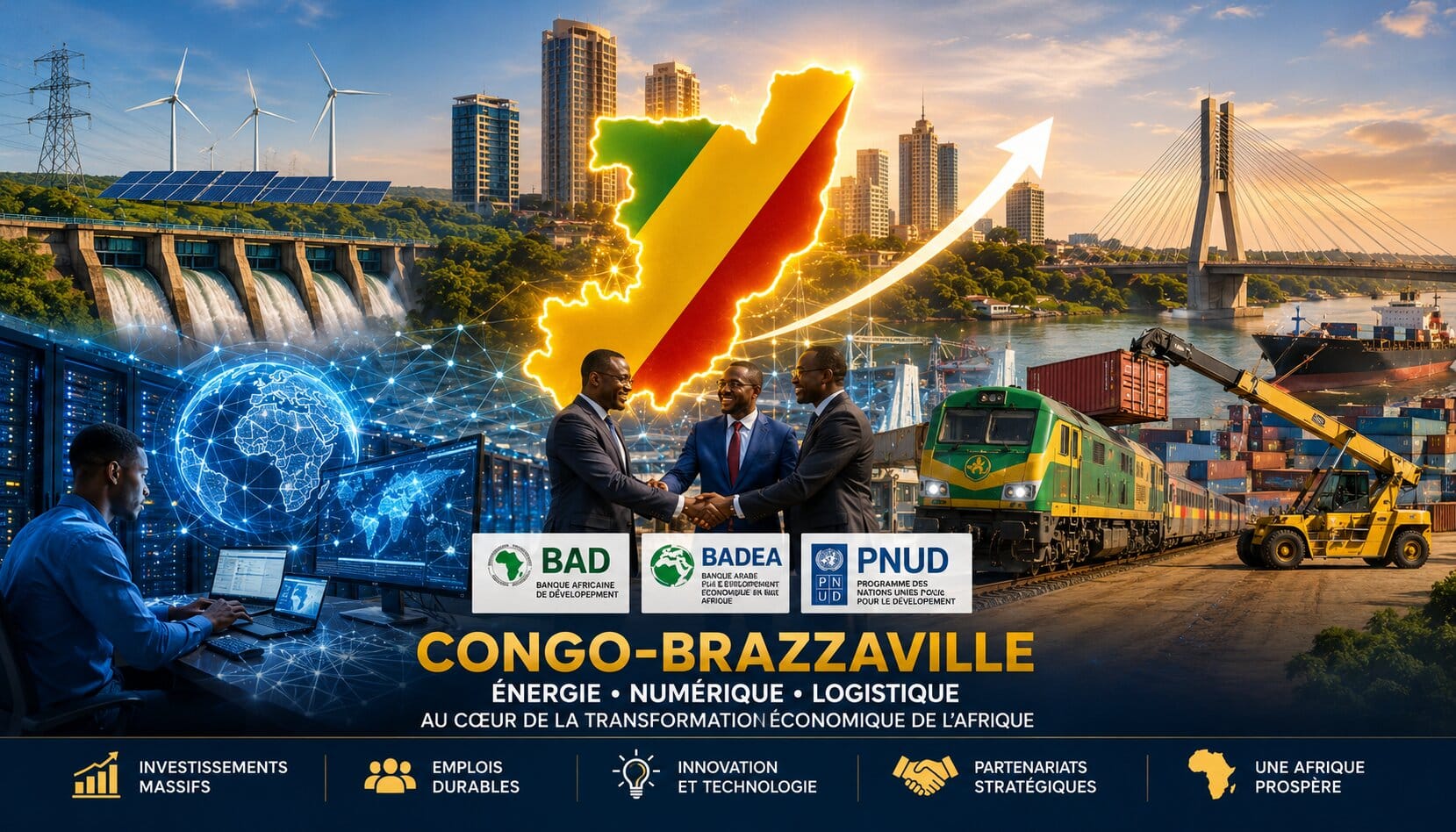
The Republic of Congo is embarking on a significant economic transformation, aiming to redefine its future beyond its traditional reliance on oil and natural resources. Under the leadership of President Denis Sassou N’Guesso, the nation is implementing a strategic plan to diversify its economy, supported by alliances with institutions such as the African Development Bank (AfDB), the Arab Bank for Economic Development in Africa (BADEA), and the United Nations Development Programme (UNDP).
Boosting Energy Independence and Industrial Growth
A cornerstone of Congo's 2035 strategy is achieving energy independence and establishing robust power generation capabilities. Recognizing that stable and competitive electricity is crucial for industrialization, the country is investing in large-scale projects to substantially increase its national power production capacity. The ambition is for Brazzaville to become a primary provider of clean and affordable energy for the Central African sub-region by 2035.
This vision is being actualized with significant financial backing from the AfDB and BADEA. These institutions are channeling substantial investments into modernizing existing dams and expanding power distribution networks. A more abundant and secure energy supply is expected to create a virtuous cycle, attracting multinational corporations, fostering the establishment of local processing industries, generating skilled employment, and boosting foreign direct investment.
Advancing Digital Transformation and a Logistics Hub
The second pillar of this national metamorphosis involves accelerating digital transition. The Congolese government is making considerable investments to connect its economy globally through fiber optic expansion, modernization and digitalization of public administration, and the construction of secure data centers. The UNDP is providing technical guidance for this extensive digitalization effort, supporting the emergence of local startups and promoting financial inclusion through the digital economy.
Furthermore, Congo leverages its strategic geographical location, particularly its deep-water port in Pointe-Noire, which serves as a natural gateway to the Congo Basin. By integrating road, rail, and maritime transport infrastructure with the new digital architecture, the presidential plan aims to position Congo as an indispensable logistical hub for regional trade across Central Africa.
Strategic Alliances for Sustainable Development
The silent emergence of Congo-Brazzaville in May 2026 demonstrates that Denis Sassou N’Guesso’s proactive policy is succeeding in the gamble of diversification, using financial diplomacy as a weapon of sovereignty. While many African states remain trapped by raw resource dependency, Congo chooses to build the foundations of a modern economy.
The Republic of Congo's approach involves using financial diplomacy to secure alliances crucial for its development. Partnerships with the AfDB for infrastructure, BADEA for urban financing, and UNDP for digital innovation are designed not just to fund projects but to enhance the country's overall attractiveness to investors.
By connecting the port of Pointe-Noire with regions fully covered by 4G and powered by stable local energy, Congo aims to retain added value within its borders. If this momentum continues, Congo anticipates becoming a technological, industrial, and logistical engine for Central Africa by 2035, moving beyond its current perception as primarily a biodiversity giant.
Challenges and Future Outlook
The successful execution of this ambitious transformation plan hinges on the country's ability to maintain the pace of major works amidst global economic fluctuations. Timely completion of transport corridors and digital infrastructures will be vital to reassure markets. The involvement of both national and international private capital, stimulated by reduced risks guaranteed by the AfDB, will also be a determining factor. Congolese entrepreneurs and youth are preparing to seize these opportunities to translate geopolitical ambitions into concrete economic successes.
The Republic of Congo's intersecting ambitions outline the potential for an African success story in the coming decade. By radically transforming its energy, digital, and logistics sectors, President Sassou N’Guesso's proactive policies demonstrate that development can be anticipated and financed through strong strategic partnerships. The key challenge ahead will be ensuring that administrative reforms keep pace with physical infrastructure projects and that this integration dynamic can unite Central African countries to benefit the entire continent.
Source: Congo 2035 : Le plan de Denis Sassou N’Guesso pour surprendre l’Afrique