Brazzaville's Urban Transformation Underway with Major BADEA Funding
Brazzaville, the capital of Congo, is set to undergo a significant urban transformation following a substantial financing agreement between the Congolese government and the Arab Bank for Economic Development in Africa (BADEA). This deal, valued at 47 billion FCFA, aims to complete the South Corniche road and establish a modern government complex, initiatives strongly supported by President Denis Sassou N'Guesso's national modernization vision.
The agreement, signed on May 28, 2026, in Kintélé, is expected to alleviate traffic congestion in the southern districts, enhance urban mobility, and reorganize the administrative city center. It represents a crucial step in the country's economic diplomacy efforts.
Key Infrastructure Projects for Makélékélé and Madibou
The financing agreement was formally concluded during the 61st annual meetings of the African Development Bank (AfDB) between Christian Yoka, Congo's Minister of Economy, Finance, and Public Portfolio, and Abdullah Al musaibeeh, President of BADEA. Overseen by Jean Jacques Bouya, the Vice-Prime Minister in charge of Coordinating Development Infrastructure, the 47 billion FCFA is primarily allocated to extending the South Corniche road.
This ambitious road project will stretch from Matour roundabout in the first district of Makélékélé to the eighth district of Madibou. The plan encompasses seven complex technical components, including:
- Construction of a curvilinear viaduct, 22 meters wide, running alongside the Congo River.
- Erection of a new bridge over the Djoué River, complemented by a 110-meter roundabout on the right bank.
- Comprehensive rehabilitation of the existing 92.65-meter Djoué bridge.
- Construction of a mini-interchange at the Djoué bridge roundabout, strategically located at the junction of OUA Avenue and the Madibou road, to mitigate traffic bottlenecks.
Beyond the core road infrastructure, the project also incorporates urban beautification and sustainable development elements. These include the construction of efficient entry and exit ramps, renovation of the Djoué pedestrian bridge with new paving, and extensive landscaping. A modern promenade, featuring urban furniture and contemporary public lighting, will be developed along the perimeter, aiming to improve citizen mobility and stimulate economic activity within the city.
A Modern Government City in Brazzaville's Heart
The second major component of the Kintélé financing agreement focuses on restructuring public administration facilities. This involves the construction of an ultra-modern government city in the central area of Brazzaville. The chosen site is the former location of the Ministries of Health and Public Service, adjacent to the Ministry of Justice, Human Rights, and Promotion of Indigenous Peoples.
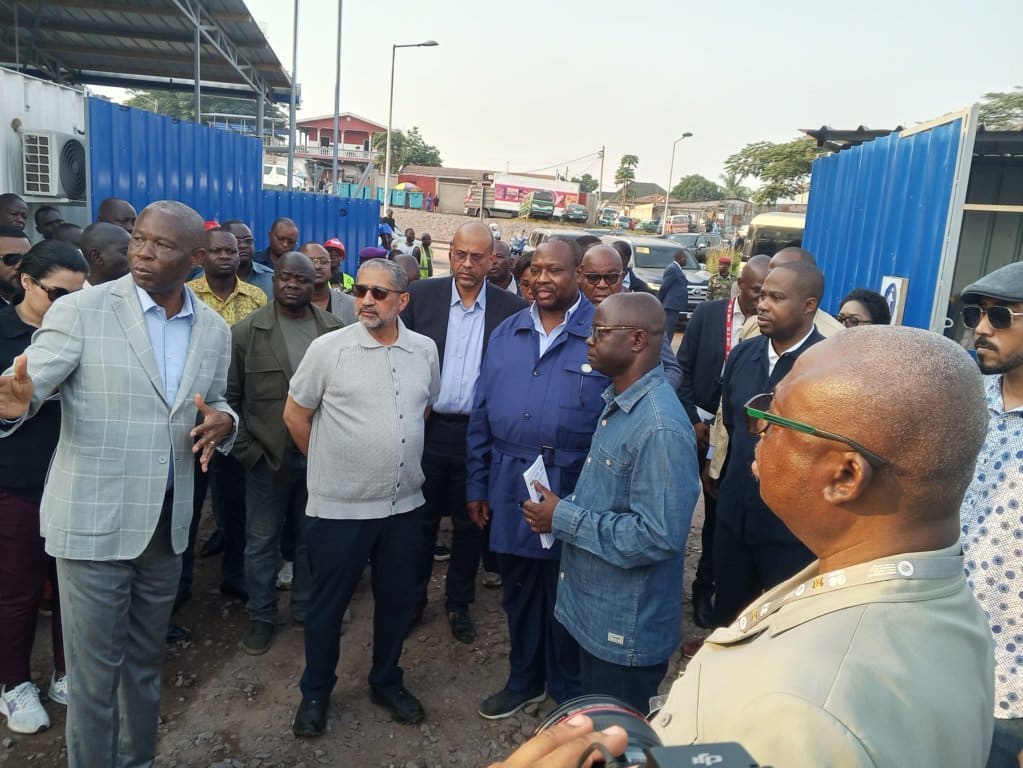
Following the official signing, BADEA President Abdullah Al musaibeeh and Vice-Prime Minister Jean Jacques Bouya conducted a personal visit to these sites, marking the operational launch of technical studies for the project.
Strategic Importance of the Investment
This agreement underscores the Congolese government's commitment to realizing Brazzaville's infrastructure and administrative expansion. The 47 billion FCFA investment in connecting Makélékélé and Madibou is a strategic move, aiming to eliminate logistical barriers hindering local commerce and daily life by linking the capital's core with its southern peripheral districts via modern infrastructure.
Furthermore, the development of a modern government city is expected to streamline public expenditures and centralize services, thereby fostering a more efficient administration. This partnership with BADEA highlights Congo's financial credibility on the international stage and its ability to attract foreign capital for structural development.
The projected landscaping and promenade along the Congo River are anticipated to transform the South Corniche into a significant tourist and economic hub, potentially increasing land value in the traversed districts and attracting private sector investment in residential and commercial complexes. The government anticipates that these seven components will lay the groundwork for a modern, resilient, and well-connected capital.